 Call Us:- 08045477407Call Us:- 08045477407

 Send Inquiry
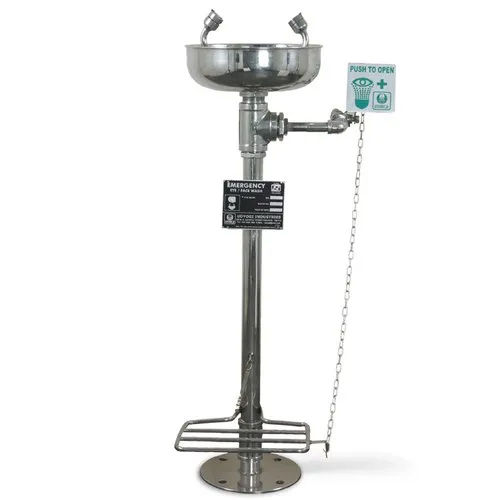
Hand And Foot Operated Eyewash Station
Price 3553 INR/ Piece
MOQ : 50 Pieces
Hand And Foot Operated Eyewash Station Specification
- Features
- Hand and foot operated, corrosion resistant, quick activation, aerated spray heads, dust covers
- Number Of Layers
- Single Unit
- Water Proof
- Yes
- Gender
- Unisex
- Shelf Life
- Long-lasting/Durable
- Material
- Iron
- Disposability
- Reusable
- Function
- Protection
- Reusable
- Yes
- Usage
- Industrial
- Color
- Yellow
- Application
- Laboratory, Workshop, Hospital, Factory, Chemical Industry, etc.
- Tensile Strength
- High (suitable for industrial applications)
- Length
- Standard (approx. 1050 mm height overall)
- Product Type
- Eyewash Station
- Size
- Standard
- Weight
- Approximately 10-15 kg
- Eye Wash Nozzle Type
- Soft aerated flow nozzles with dust covers
- Supply Type
- Direct Plumbing Supply
- Installation Area
- Indoor or covered outdoor areas
- Drain Size
- 1-1/4 inch BSP male connection
- Water Inlet Size
- 1/2 inch BSP male connection
- Flow Rate
- 12-15 liters per minute (as per standard requirements)
- Pressure Requirement
- 2.0 to 4.0 kg/cm2 (28-56 psi)
- Mounting Type
- Floor Mounted
- Ambient Temperature Range
- 5C to 45C (operational)
- Standards Compliance
- IS:10592/ANSI Z358.1-2014 compliant
- Finish
- Polished / Corrosion-resistant epoxy coating
- Bowl Diameter
- Around 250 mm
- Operating Mechanism
- Dual activation (hand push plate and foot pedal)
Hand And Foot Operated Eyewash Station Trade Information
- Minimum Order Quantity
- 50 Pieces
- Payment Terms
- Cash Advance (CA)
- Supply Ability
- 500 Pieces Per Week
- Delivery Time
- 5 Days
- Main Domestic Market
- All India
About Hand And Foot Operated Eyewash Station
Hand and Foot Operated Eyewash Station is designed to be operated by either hand or foot, making it accessible to individuals with disabilities or those who may have injuries preventing them from using their hands. The eyewash station typically includes a basin or bowl to hold water, as well as a spray nozzle or fountain for directing water into the eyes. Hand and Foot Operated Eyewash Station is an essential safety feature in environments where there is a risk of eye injury, such as laboratories, manufacturing facilities, and other workplaces.
Dual Activation for Maximum Safety
This eyewash station is equipped with both hand and foot operation mechanisms, enabling fast activation by either method. It is suitable for situations where one hand may be immobilized or contaminated, thus enhancing overall safety during emergencies. With a spacious 250 mm bowl and easily accessible controls, the user can swiftly irrigate both eyes for immediate relief.
Robust and Compliant Build Quality
Structured from durable SS 304 grade stainless steel and high-grade iron, the station is built to withstand rigorous industrial use. Its polished, corrosion-resistant epoxy coating ensures longevity even in harsh environments. The system is compliant with IS:10592 and ANSI Z358.1-2014, ensuring reliable operation for health and safety standards.
Easy Installation and Versatile Use
Designed for floor mounting, the eyewash station connects directly to the plumbing system via standard BSP male connections. Its compatibility with ambient temperatures of 5C to 45C and adaptability to both indoor and covered outdoor areas makes it ideal for diverse applications, including factories, chemical plants, laboratories, and hospitals.
FAQ's of Hand And Foot Operated Eyewash Station:
Q: How does the dual activation mechanism of the eyewash station work?
A: The station can be operated either by pressing the hand push plate or stepping on the foot pedal, allowing users to activate the eyewash quickly even if one hand is occupied or injured. This dual mechanism ensures immediate access in emergency situations.Q: What is the water flow rate and why is it important?
A: The eyewash provides a flow rate between 12 and 15 liters per minute, as per standard requirements. This rate is optimal for efficiently flushing hazardous substances from the eyes while maintaining comfort and minimizing further injury.Q: Where can this eyewash station be installed?
A: It is designed for floor mounting and can be installed in indoor or covered outdoor areas such as laboratories, workshops, hospitals, factories, and chemical industries. Direct plumbing supply connection is required via a 1/2 inch BSP male inlet.Q: What are the benefits of soft aerated flow nozzles with dust covers?
A: The soft aerated flow nozzles ensure a gentle yet effective wash to avoid injuring sensitive eye tissues, while dust covers protect the nozzles from contaminants, ensuring clean water delivery when needed.Q: What materials are used in the construction of this eyewash station?
A: The bowl and piping are made from SS 304 grade stainless steel, the structure utilizes high-strength iron, and the nozzles employ brass or ABS. These materials ensure corrosion resistance, high tensile strength, and long-term durability, suitable for industrial conditions.Q: How do you maintain or clean the eyewash station for continued effectiveness?
A: Regularly check for debris or blockages in the nozzles and bowl. Ensure dust covers are in place when not in use, and periodically activate the station to flush out stagnant water. Follow manufacturer's guidelines for inspections and cleaning schedules.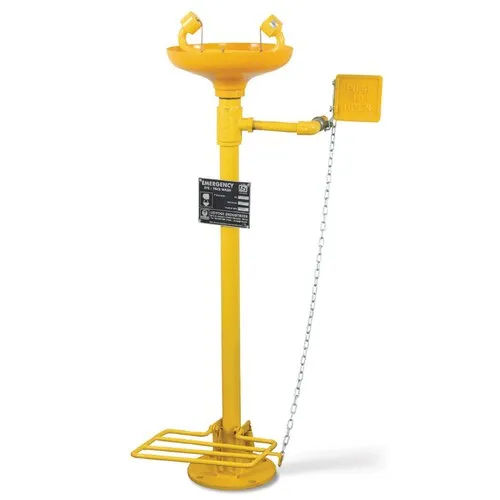
Tell us about your requirement

Price:
Quantity
Select Unit
- 50
- 100
- 200
- 250
- 500
- 1000+
Additional detail
Mobile number
Email

More Products in Safety Shower And Eyewash Category
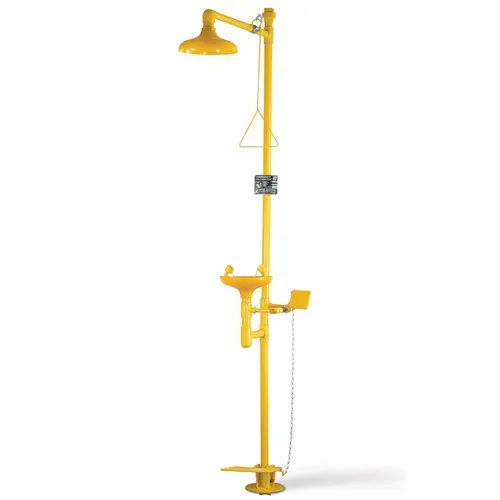
Udyogi 6250 GI Safety Shower Cum Eyewash
Price 7200 INR / Piece
Minimum Order Quantity : 10 Pieces
Product Type : Safety Shower
Size : Standard
Color : Yellow
Usage : Industrial
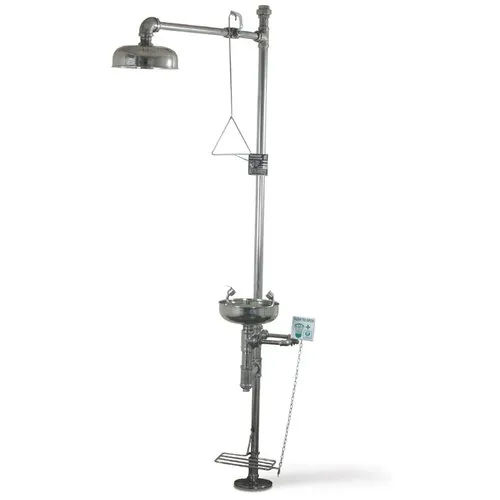
Udyogi 6250 Safety Shower Cum Eyewash Station
Price 23553 INR / Piece
Minimum Order Quantity : 50 Pieces
Product Type : Eyewash Station
Size : Standard
Color : Silver
Usage : Industrial
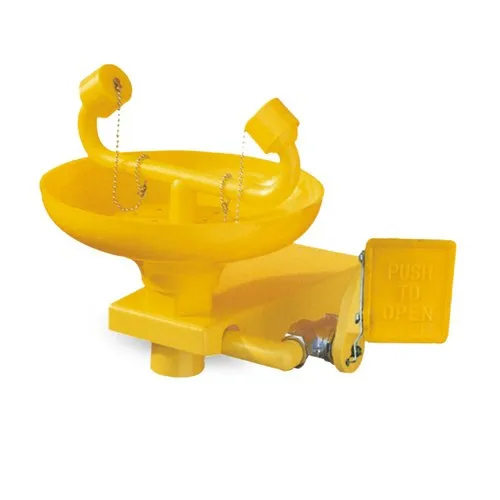
Udyogi 4810 Wall Mounted Safety Eyewash
Price 3121 INR / Piece
Minimum Order Quantity : 50 Pieces
Product Type : Safety Eyewash
Size : Compact, wall mountable
Color : Yellow
Usage : Industrial
Udyogi 4710 Hand And Foot Operated Safety Eyewash
Price 9750 INR / Piece
Minimum Order Quantity : 1 Piece
Product Type : Safety Eyewash
Size : Standard
Color : Silver
Usage : Industrial

ABM CORP
GST : 27AABFH7299H1ZZ
Contact Details

- 616, New Shukrawar Peth, Bohri Alley, Pune - 411002, Maharashtra, India

- MR. LOKHANDWALA (PROPRIETOR)
- Mobile :08045477407

 Send Inquiry
 Send SMS
ABM CORP
All Rights Reserved.(Terms of Use)
Developed and Managed by Infocom Network Private Limited.
Developed and Managed by Infocom Network Private Limited.
